
Heavy Equipment Repair Corpus Christi, TX
Heavy Equipment Repairs in Salty Environments
The Gulf Coast is unforgiving on equipment. Salt air, high humidity, and coastal wind drive corrosion into metal components at a rate that operators in inland markets rarely deal with. If you're running heavy equipment in Corpus Christi or anywhere along the Texas coast, the service and maintenance schedule that works in dry, inland conditions won't cut it here.
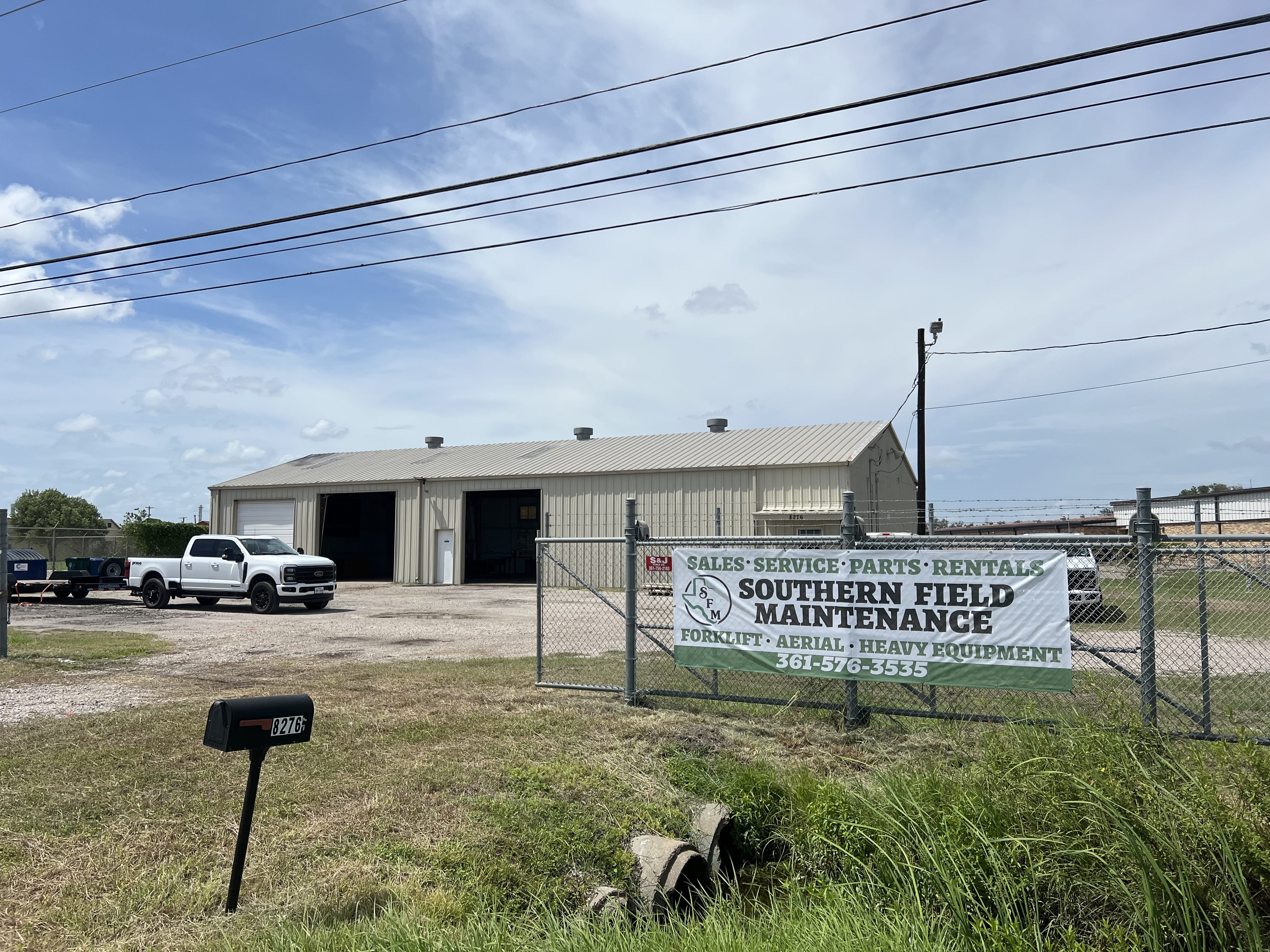
At Southern Field Maintenance, we operate out of our Corpus Christi location at 8276 Leopard St specifically to support the coastal Texas market. We understand what salt air does to forklifts, excavators, trailers, and diesel engines, and we repair equipment that's been working in these conditions every day.
Why Salt Air Is Harder on Equipment Than Anything Inland
Salt in the air doesn't just sit on the surface. It works into joints, threads, electrical connections, and hydraulic fittings over time. Once corrosion takes hold inside a connector or fitting, the damage isn't always visible until something fails. That's what makes coastal maintenance different: the problems are often happening out of sight before they show up as a breakdown.
Sodium chloride accelerates the electrochemical reaction that causes rust. On steel frames, cylinders, and mounting brackets, that translates to metal thinning, pitting, and eventual structural weakness. On electrical systems, salt moisture causes corrosion at terminals and connectors that leads to shorts, intermittent failures, and sensor malfunctions that can be difficult and time-consuming to diagnose.
Add in the humidity levels typical of the Corpus Christi coastline and you have conditions that push equipment toward failure significantly faster than the same machine would experience 200 miles inland. Manufacturers' maintenance schedules are written for average operating environments. The Gulf Coast is not average.
The Components Most Vulnerable to Salt Corrosion
Some systems take the punishment harder than others. These are the areas we watch most closely on coastal equipment:
Hydraulic cylinders and fittings: Unsealed fittings corrode quickly in salt air. A corroded cylinder rod damages seals on every stroke, leading to leaks and pressure loss.
Electrical connections and wiring harnesses: Salt moisture at connectors causes resistance buildup and intermittent failures. Symptoms show up as sensor errors, erratic controls, and no-starts that move around the system.
Brake systems: Brake hardware, calipers, and drums corrode faster in coastal environments. Equipment that sits between shifts can develop brake drag or reduced stopping performance.
Engine air intake and cooling systems: Salt-laden air passing through intake filters accelerates filter contamination. Cooling fins on radiators can corrode and clog, reducing cooling efficiency at the worst possible time.
Frames, mounting hardware, and undercarriages: Fasteners and structural steel are constantly exposed. Fasteners can seize completely, making repairs far more labor-intensive than they should be.

What a Proper Coastal Maintenance Program Looks Like
Coastal equipment needs more frequent touchpoints than standard manufacturer intervals suggest. Here's how a responsible maintenance program adjusts for salt air and Gulf Coast humidity:
Shorten inspection intervals: Electrical connections, hydraulic fittings, and brake hardware should be inspected more frequently than the standard schedule. Catching early corrosion is far cheaper than replacing a failed component.
Regular wash-downs: Equipment that works near the coast benefits from fresh water rinses after saltwater or spray exposure. This slows surface corrosion and prevents salt buildup from working into joints and threads.
Corrosion protection on exposed metal: Anti-corrosion coatings on frame sections, fasteners, and hydraulic components add a meaningful layer of defense against salt attack.
Fluid condition monitoring: Hydraulic fluid and engine oil can take on moisture over time in humid environments. Monitoring fluid condition and changing it on schedule prevents internal corrosion in pumps and engines.
Air filter replacement on a compressed schedule: Salt air clogs filters faster. Waiting for the standard interval means your engine may be running restricted for weeks before the service date arrives.
Our team handles heavy equipment repair in Corpus Christi with these conditions in mind on every inspection. We don't apply an inland checklist to coastal machines.
Southern Field Maintenance: Serving the Corpus Christi Market
Southern Field Maintenance was founded in Victoria, TX in 1984 as a diesel engine repair operation. Over forty years, we've grown into a full-service equipment company with two locations, a broad service offering, and deep experience working on the kinds of equipment coastal Texas operations actually use.
Our Corpus Christi heavy equipment operation at 8276 Leopard St covers forklifts, telehandlers, excavators, and aerial lifts. We provide on-site repair for equipment that can't easily be moved and shop service for machines that need more intensive work. Our technicians are familiar with the brands and models that show up most often in coastal industrial, construction, and port-adjacent operations.
From diagnostics to component replacement, our goal is getting your equipment back to work with minimal downtime. You can browse our current inventory if you need a rental or replacement unit while repairs are in progress.
Frequently Asked Questions About Heavy Equipment Repair in Salty Environments
How does salt air affect hydraulic systems specifically?
Salt moisture attacks hydraulic systems at the seals, fittings, and exposed cylinder rods. Corroded rod surfaces damage seals on every stroke, causing fluid leaks and eventual pressure loss. Salt can also contaminate fluid reservoirs through breather caps, introducing moisture that causes internal corrosion in pumps and valves. Regular hydraulic fluid sampling and fitting inspections catch these problems early.
How much more often should coastal equipment be serviced compared to inland machines?
Industy recommends planned maintenance intervals of 250 hours., but a reasonable starting point is reducing service intervals by 20 to 30 percent for equipment working in salt air environments. For high-exposure applications such as port operations, marine construction, or beach-adjacent jobsites, some intervals should be cut in half. The specific adjustments depend on the equipment type and how directly it is exposed to salt spray or sea breeze conditions.
Does Southern Field Maintenance have a Corpus Christi location?
Yes. We provide on-site service for equipment that cannot easily be transported to our Corpus Christi shop. Our technicians cover a 100-mile service radius from our Corpus Christi location, which includes the surrounding communities and coastal industrial areas throughout the region. For equipment that needs shop-level repairs, we can also coordinate pickup and return.
Ready to schedule service for your coastal equipment?
Call Southern Field Maintenance at (361) 576-3535 or visit sfmvictoria.com to schedule service at our Corpus Christi location: 8276 Leopard St, Corpus Christi, TX 78409. Check our hours and directions before heading over.